
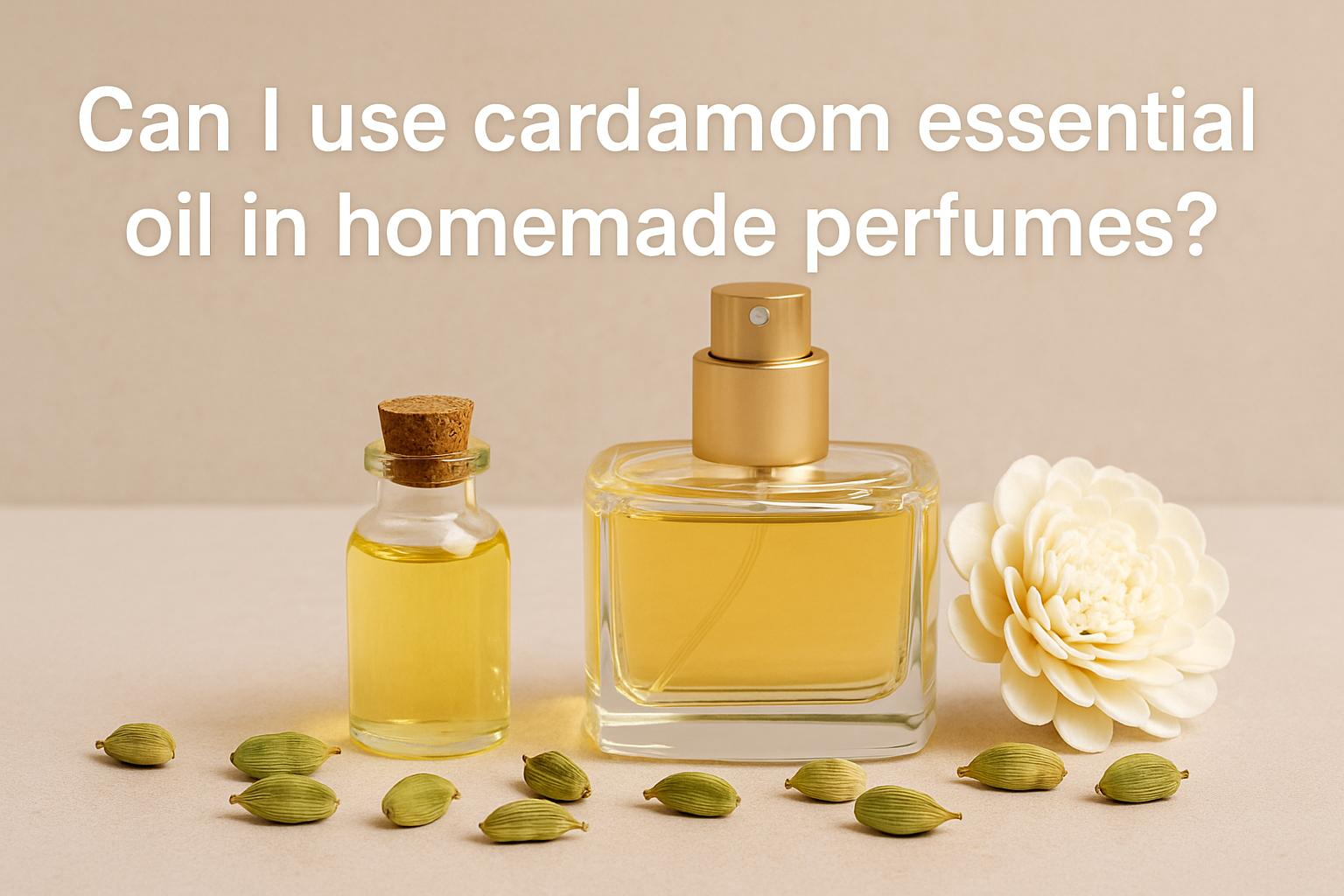
Can I use cardamom essential oil in homemade perfumes?
-
Apr, 03, 2026
What makes cardamom essential oil suitable for perfume blending?
Cardamom essential oil is highly suitable for perfume blending due to its aromatic depth, chemical structure, and skin-friendly nature. It adds warmth, balances compositions, and enhances the longevity of volatile top notes.
- Rich Terpene Composition for Scent Layering
The oil contains 1,8-cineole, α-terpineol, and limonene—compounds that contribute to its distinctive fragrance. These constituents allow it to mix smoothly with other oils, creating a harmonious blend rather than clashing with delicate notes. - Moderate Volatility for Scent Stability
Cardamom’s evaporation rate makes it an ideal middle note. It helps stabilize top notes (which fade quickly) and connects them with deeper base notes, offering a rounded fragrance experience. - Non-Cloying Warm Aroma
Unlike some spicy oils that can dominate or irritate, cardamom’s scent remains gentle, uplifting, and tolerable. It delivers a refined spice note without being too sharp or sweet. - Complements Both Cool and Warm Fragrance Families
It blends well with both cooling oils like peppermint or eucalyptus and warm oils like vanilla or amber. This dual compatibility gives it an advantage in perfumes that shift in tone or mood. - Safe for Daily Wear Perfumes
When properly diluted, cardamom essential oil rarely causes irritation or sensitization. This makes it a safe choice for fragrances meant to be worn on the skin daily. - Enhances the Complexity of Fragrance Blends
It adds structure to perfume recipes by supporting the transition from lighter to heavier notes, resulting in more professionally layered scents. - Prolongs Fragrance Perception on Skin
Though not a fixative itself, cardamom helps hold top notes longer, improving initial impressions without shortening the lifespan of the overall scent.
Does cardamom oil blend well with other essential oils in perfumes?
Yes, cardamom oil is a versatile blending agent in perfumery. It is especially useful in harmonizing contrasting oils and creating smooth transitions in layered scent compositions.
- Blends Seamlessly with Citrus Oils
Cardamom’s crisp freshness pairs perfectly with bergamot, orange, grapefruit, and lemon. These combinations work well for uplifting daytime perfumes and energizing body mists. - Enhances Floral Notes
It deepens the sweetness of floral oils like jasmine, rose, and ylang-ylang without overpowering them. When paired correctly, it turns light floral blends into more sophisticated and romantic compositions. - Supports Woody and Earthy Profiles
It merges naturally with oils like sandalwood, cedarwood, and vetiver, lending warmth and depth to otherwise dry or musky base layers. - Pairs Well with Resinous and Balsamic Oils
In oriental or incense-like blends, cardamom enhances frankincense, myrrh, and benzoin by adding vibrancy to otherwise thick, sticky notes. - Balances Spicy and Sweet Accords
Cardamom works alongside clove, nutmeg, or cinnamon by softening their intensity and offering a more rounded, less medicinal aroma. - Creates Gender-Neutral Scent Profiles
Its adaptability allows it to be used in perfumes that avoid leaning too masculine or feminine, making it ideal for unisex products. - Improves Olfactory Complexity in Custom Formulas
Cardamom’s multi-dimensional scent makes it a key component in niche fragrance formulations where complexity and nuance are desired.
How much cardamom essential oil should I use in DIY perfume formulas?
Proper dilution is essential when using cardamom essential oil in homemade perfumes. The concentration depends on the perfume type and your skin’s sensitivity.
- For Oil-Based Perfumes (Rollers or Balms)
Use 1–3 drops of cardamom oil per 10ml carrier oil. This ensures a noticeable scent without causing skin irritation. Ideal carrier oils include jojoba, sweet almond, or fractionated coconut. - For Alcohol-Based Sprays
Cardamom can constitute 5% to 15% of the total essential oil blend in ethanol or perfumer’s alcohol. A typical 30ml perfume spray may include up to 12 drops, depending on the blend’s intensity. - In Solid Perfume Balms
For beeswax or shea butter-based balms, use around 1% to 2% essential oil concentration to maintain skin safety and scent balance. - When Used with Other Strong Scents
Reduce the cardamom concentration if pairing with other dominant oils like cinnamon or patchouli. This prevents overwhelming the perfume’s profile. - Sensitive Skin Considerations
If you’re prone to allergies or sensitivities, use less than 1% concentration (around 1 drop per 10ml blend) and always do a patch test. - Layered Note Planning
Since cardamom is a middle note, balance it with roughly equal portions of top and base notes to create a harmonious progression. - Avoid Overuse in Minimalist Perfumes
In single-note or minimalist blends, cardamom should remain subtle to prevent clashing with the skin’s natural oils.
Is cardamom essential oil safe for sensitive skin in perfumes?
Cardamom essential oil is generally safe for most skin types, including sensitive skin, when used correctly. However, like all essential oils, it requires proper dilution and testing.
- Low Irritation Risk When Diluted
When used at appropriate concentrations (under 2%), cardamom oil is unlikely to cause irritation. Its natural anti-inflammatory compounds may even calm minor redness or sensitivity. - Performs Well in Sensitive Skin Formulas
Its non-comedogenic nature means it won’t clog pores, making it safe for facial fragrance balms or skin sprays for those with acne-prone skin. - Patch Testing is Essential
Always apply a small amount of diluted perfume behind the ear or on the inner forearm and wait 24 hours. This identifies any allergic reaction early. - Avoid Application on Broken or Inflamed Skin
Do not use perfumes with cardamom oil on irritated, sunburned, or damaged skin as essential oils may worsen the condition. - Best Used in Carrier Oils with Soothing Properties
Pair with jojoba, grapeseed, or calendula-infused oil for added skin protection in sensitive-skin formulations. - Use Lower Concentrations in Leave-On Products
For leave-on products like colognes or body oils, keep cardamom below 1% to prevent prolonged exposure reactions. - We Ensure Purity in Our Cardamom Oil
At ABIE Cardamon, we offer premium-grade essential oils that are steam-distilled and third-party tested for cosmetic safety, including use on sensitive skin.
Can cardamom oil be used in alcohol-based and oil-based perfumes?
Yes, cardamom essential oil is highly adaptable and can be used effectively in both alcohol-based and oil-based perfumes. Its solubility and aromatic profile make it an ideal component in a variety of natural fragrance preparations.
- Soluble in High-Proof Ethanol for Spray Perfumes
Cardamom oil dissolves easily in perfumer’s alcohol or high-proof ethanol, making it a suitable choice for creating fine mists and spray perfumes. Its middle-note characteristics provide a balanced body that lasts several hours after application. - Stable in Carrier Oils for Roll-On Blends
In oil-based perfumes, such as those using jojoba or sweet almond oil, cardamom retains its scent well over time. These formulas are ideal for sensitive skin and provide a gentle, long-lasting fragrance without the use of synthetic chemicals. - Longer Scent Longevity in Oil-Based Perfumes
Oil-based perfumes tend to absorb more slowly into the skin, which helps preserve the cardamom aroma for extended periods—often 6 to 8 hours, compared to 2 to 4 in alcohol sprays. - Ideal for Travel-Friendly Solid Perfumes
Cardamom oil works well in wax-based solids, such as those using beeswax or candelilla wax, creating convenient, portable fragrances that warm into the skin when applied. - No Performance Loss Across Mediums
Whether in oil or alcohol bases, the fragrance quality of cardamom remains intact. Its moderate volatility ensures consistent performance in both spray and dab-on applications. - Supports Skin Hydration in Oil-Based Recipes
When used in an oil base, cardamom not only perfumes the skin but also supports hydration and softening, especially when combined with nourishing carriers like avocado or rosehip oil. - Customization Potential with Other Ingredients
Cardamom acts as a reliable middle note that helps bridge fast-evaporating top notes (like citrus) and lingering base notes (like musk or amber), providing coherence across fragrance types.
What are the scent characteristics of cardamom in natural perfumery?
Cardamom essential oil delivers a sophisticated and multidimensional scent profile that enhances the elegance and warmth of natural perfumes. It is commonly used to add freshness, complexity, and balance.
- Spicy-Sweet and Warm Aroma
Cardamom’s scent is both spicy and sweet, with a gentle warmth that is less aggressive than clove or cinnamon. This makes it inviting and versatile in many perfume genres. - Hints of Citrus and Herbal Notes
The oil contains natural limonene and cineole, giving it subtle citrusy and herbaceous undertones. These brighten the blend and provide freshness without being overpowering. - Smooth Balsamic Base
While primarily a middle note, cardamom includes faint balsamic characteristics that help mellow sharp top notes and add a soft dry-down quality. - Non-Intrusive but Persistent
Unlike sharper spice oils, cardamom doesn’t overwhelm a composition. It’s detectable in the heart phase of the perfume and provides elegant continuity as the scent evolves. - Energizing Yet Grounding
The balance between spicy brightness and soft warmth makes cardamom an ideal choice for perfumes meant to energize or promote focus, while still feeling calming and grounded. - Culturally Rich Scent Legacy
In traditional perfumery from the Middle East and India, cardamom has long been used for its luxurious aroma. It’s a common component in ceremonial and festive blends, symbolizing refinement and vitality. - Blends Well Without Dominating
Cardamom adapts well in both dominant and supporting roles, capable of standing out in a minimalist perfume or harmonizing as a bridge in more complex structures.
Is cardamom oil a top, middle, or base note in fragrance layering?
Cardamom essential oil is classified as a middle note in perfumery, which means it plays a central role in the evolution and structure of a fragrance composition.
- Acts as the “Heart” of the Perfume
Middle notes like cardamom appear after the top notes fade and set the main theme of the fragrance. Cardamom provides warmth, smoothness, and body, defining the scent’s character. - Bridges Top and Base Notes Effectively
As a transitional layer, cardamom links bright top notes (like citrus) to deep base notes (like oud or amber), ensuring a smooth scent development over time. - Lasts 2 to 5 Hours on the Skin
Its moderate volatility means cardamom sticks around longer than fleeting top notes but eventually gives way to base notes. This makes it perfect for heart-focused scents. - Stabilizes Volatile Top Notes
Cardamom’s molecular structure helps stabilize and extend the presence of fast-evaporating oils like lemon or peppermint, making the initial impression of the perfume more durable. - Supports a Smooth Dry-Down Experience
As the middle note fades, it eases the transition to base notes. In doing so, it reduces abrupt shifts in the scent profile, which enhances the wearer’s experience. - Essential in Multi-Layered Blends
Most complex perfumes rely on middle notes to carry the emotional weight and identity of the fragrance. Cardamom’s balance of warmth and freshness makes it a favorite in both commercial and artisanal perfumes.
What essential oil families pair best with cardamom in perfume recipes?
Cardamom essential oil blends harmoniously with various essential oil families, enhancing a wide spectrum of fragrance styles from fresh and uplifting to deep and sensual.
- Citrus Oils for Freshness and Clarity
Oils like bergamot, lemon, and sweet orange amplify cardamom’s natural brightness. These pairings are ideal for daytime perfumes and body sprays. - Floral Oils for Romance and Softness
When blended with rose, jasmine, or neroli, cardamom creates a warm, elegant heart note that supports delicate florals without overpowering them. - Woody Oils for Depth and Structure
Sandalwood, cedarwood, and vetiver form rich base layers that enhance cardamom’s warm, spicy undertone. These blends are popular in evening and winter perfumes. - Resinous Oils for Oriental and Exotic Notes
Frankincense, myrrh, and benzoin build depth when layered with cardamom, creating luxurious, incense-like profiles. These pairings are ideal for spiritual, earthy, or ritualistic blends. - Spice Oils for Bold and Sensual Blends
Clove, black pepper, and ginger add complexity and warmth to cardamom-centered perfumes. However, balance is key to prevent the blend from becoming too hot or sharp. - Herbal Oils for Clean and Aromatic Profiles
Blends with rosemary, lavender, and eucalyptus bring out the herbal side of cardamom, suitable for fresh, unisex, or gender-neutral fragrances. - Gourmand Oils for Edible Scent Accords
When used with vanilla or tonka bean, cardamom helps construct sweet, dessert-like scents with an exotic twist, often featured in niche and boutique perfumes.
Does cardamom essential oil have any fixative properties in perfume?
While not a traditional fixative like vetiver or benzoin, cardamom essential oil contributes to scent longevity and structural integrity in natural perfumes. It functions as a soft anchor for fleeting top notes and enhances overall blend cohesion.
- Moderate Evaporation Rate Supports Fragrance Stability
Cardamom’s evaporation rate allows it to linger on the skin longer than citrus top notes. This helps preserve the fragrance profile during the initial dry-down stage. - Prolongs the Impact of Top Notes
In perfumes containing volatile oils like lemon or bergamot, cardamom slows their evaporation slightly, extending their presence and improving first impressions. - Improves Overall Blend Retention
When used in conjunction with true fixatives such as sandalwood, amber, or labdanum, cardamom improves the holding power of the perfume without altering the base notes. - Smooths Fragrance Transitions
Cardamom stabilizes the shift between layers in a multi-note perfume. This makes the experience less abrupt and more harmonious for the wearer. - Useful in Light, Natural Perfumes
In essential-oil-only perfumes with no synthetic fixatives, cardamom acts as a natural alternative to help bind and extend the scent profile. - Helps Anchor Delicate Aromas
It supports fleeting floral and citrus notes by providing a warm base, allowing them to settle more slowly into the skin rather than disappearing instantly. - Provides a Layer of Lasting Warmth
Even when the brighter aspects of the oil fade, its warm and slightly balsamic undertone lingers subtly, adding to the dry-down depth.
How long does the scent of cardamom last in homemade perfumes?
The lasting power of cardamom essential oil depends on the formulation, application area, and skin type. In general, cardamom remains noticeable for several hours and enhances the longevity of surrounding notes.
- Typically Lingers 3 to 5 Hours
As a middle note, cardamom generally remains on the skin for 3 to 5 hours, depending on environmental conditions and personal body chemistry. - Longer Duration in Oil-Based Perfumes
Oil-based perfumes help cardamom release more slowly. On average, it can last 5 to 7 hours in roller blends applied to pulse points. - Shorter Duration in Alcohol-Based Sprays
In alcohol sprays, cardamom evaporates a bit faster, offering a noticeable heart note for about 2 to 4 hours before fading into the background. - Scent Retention Can Be Boosted with Fixatives
When paired with base notes like patchouli or labdanum, cardamom’s presence may be extended further, especially in layered perfumes. - Application Area Influences Longevity
Applying perfume to well-moisturized skin or clothing can help retain the aroma. Avoid applying to dry skin, as this causes faster scent dissipation. - Environmental Conditions Matter
Heat and humidity can either amplify or shorten scent duration. Warm skin enhances the projection of spicy oils like cardamom, but excessive sweat may reduce longevity.
What skin types benefit from cardamom-infused perfumes?
Cardamom-infused perfumes are well-suited for a range of skin types, especially those looking for a clean, natural fragrance that offers both aroma and skincare benefits.
- Normal to Oily Skin Types Benefit Most
Cardamom contains natural antibacterial properties, making it a good option for individuals with oily or acne-prone skin when used in diluted fragrance oils. - Non-Comedogenic and Light on the Skin
It doesn’t clog pores and is unlikely to cause breakouts, making it safe for individuals who prefer skin-friendly natural perfumes. - Mildly Soothing for Irritated Skin
Its anti-inflammatory nature may assist in calming skin when used in appropriate dilutions, particularly in formulations with calming carriers like jojoba or calendula oil. - Dry Skin Users Should Combine with Hydrating Oils
Those with dry skin can benefit from using cardamom in oil-based perfumes, particularly when mixed with moisturizing bases like avocado oil or shea butter balm. - Suitable for Sensitive Skin with Patch Testing
Although well-tolerated, individuals with sensitive skin should conduct a patch test. When properly diluted, it rarely causes allergic reactions. - Good for Those Avoiding Synthetic Fragrances
People with fragrance sensitivities or concerns about synthetic perfume chemicals often turn to cardamom-based natural alternatives for a safer scent experience. - We Ensure Cosmetic-Grade Purity in Our Oil
At ABIE Cardamon, our essential oil is steam-distilled, pesticide-free, and tested for dermal safety, making it suitable for use in skincare-focused fragrances.
Are there any precautions when using cardamom oil in skincare fragrances?
Yes, while cardamom essential oil is generally safe when diluted, certain precautions must be taken to avoid adverse reactions, especially in skincare applications.
- Always Dilute Before Application
Essential oils must be diluted in a carrier before applying to the skin. A typical dilution is 1% for facial use and 2–3% for body applications. - Perform a Skin Patch Test
Test any new blend on a small area of skin and wait 24 hours before full use. This helps rule out allergic reactions or sensitivity. - Avoid Contact with Mucous Membranes
Do not apply perfumes containing cardamom oil near the eyes, inside the nose, or on mucosal tissue, as it may cause burning or discomfort. - Not for Use on Broken or Irritated Skin
If skin is damaged, inflamed, or healing, avoid applying essential oils directly, even in diluted form, as they may delay healing or increase irritation. - Store in a Cool, Dark Place
Cardamom oil can oxidize over time when exposed to light or air. Always store in amber bottles with tightly closed caps to preserve its aroma and efficacy. - Do Not Use During Pregnancy Without Medical Advice
While generally safe, cardamom oil should be used with caution by pregnant or breastfeeding individuals. Consult a healthcare provider before use. - Children Should Avoid Direct Skin Application
Avoid using cardamom oil on children under 6 years of age unless under the guidance of a professional aromatherapist or pediatrician.
What are the emotional or aromatherapy benefits of cardamom perfume?
In aromatherapy and natural perfumery, cardamom essential oil is appreciated not just for its scent but also for its mood-enhancing effects. It’s commonly used in personal perfumes designed to uplift and invigorate.
- Promotes Mental Clarity and Focus
Cardamom’s fresh and warm aroma has a mentally stimulating effect, making it useful in perfumes intended for work, study, or morning routines. - Reduces Stress and Anxiety
Its warm-spicy profile is calming without being sedative, helping ease emotional tension and encourage balanced energy throughout the day. - Improves Mood and Emotional Balance
The oil is associated with enhanced positivity and alertness. Many natural wellness perfumes use cardamom to reduce fatigue and elevate the spirit. - Combines Well with Calming Oils
Blending cardamom with lavender, geranium, or frankincense creates perfumes that offer both emotional stability and aromatic complexity. - Stimulates Confidence and Sensuality
Its rich scent is often used in romantic or aphrodisiac blends, encouraging emotional openness and warmth in social or intimate settings. - Useful in Mindfulness and Breathwork Rituals
Due to its ability to expand and clear the breath, cardamom is a favorite in meditation perfumes applied to the chest or temples before spiritual practice. - We Offer Therapeutic-Grade Oil for Personal Use
ABIE Cardamon ensures every drop of essential oil retains its natural energetic and aromatic properties for holistic and cosmetic purposes.
Can cardamom essential oil enhance the sensuality of personal fragrances?
Yes, cardamom is frequently used in sensual perfume blends due to its exotic aroma and subtle body-warming qualities. It brings depth and intimacy to personal fragrances.
- Warm, Alluring Scent Profile
The spicy-sweet aroma of cardamom evokes a sense of warmth and comfort. It enhances the closeness of romantic or intimate perfumes. - Pairs Well with Aphrodisiac Oils
When combined with oils like ylang-ylang, patchouli, or rose, cardamom supports sensual and seductive fragrance profiles that appeal to both partners. - Activates with Body Heat
Cardamom’s aromatic molecules are heat-sensitive, which means the scent becomes more noticeable when applied to warm areas like the neck, chest, or wrists. - Balances Masculine and Feminine Elements
It adds structure and intrigue to both floral (feminine) and woody (masculine) perfumes, making it ideal for gender-neutral or dual-purpose fragrances. - Ideal for Evening and Special Occasion Blends
Its luxurious scent profile suits nighttime use, enhancing the aura of sophistication and magnetism. - Cultural Symbol of Romance and Prosperity
In some traditions, cardamom is associated with love and attraction, often used in ceremonial fragrance blends and massage oils for couples.
